
Best Greenhouse LED Grow Lights 2026
Discover the most advanced LED grow light systems for greenhouse cultivation. Our comprehensive guide covers full spectrum lighting, energy efficiency, and professional installation tips.
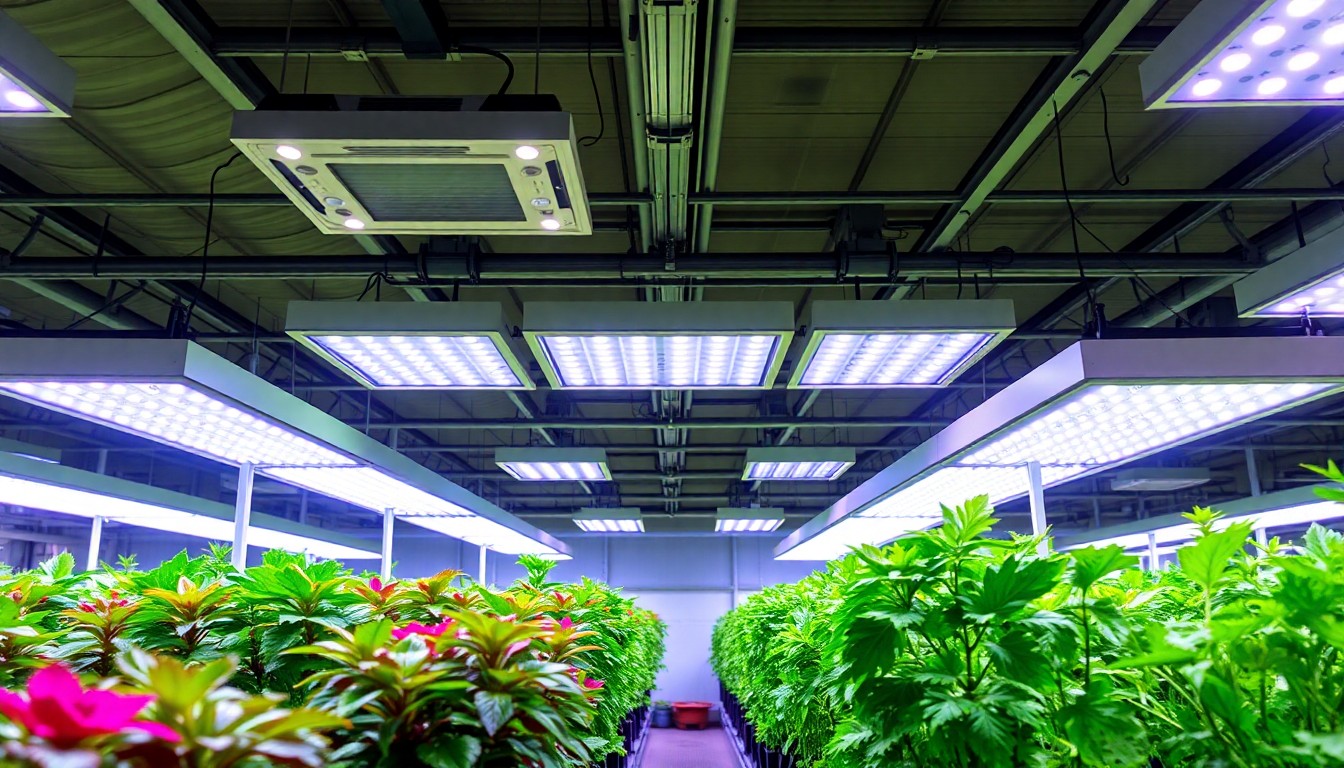
Why LED Grow Lights Are Essential for Modern Greenhouses
What Are LED Grow Lights?
LED (Light Emitting Diode) grow lights are advanced, highly efficient lighting systems designed to supplement or replace natural sunlight for indoor and greenhouse farming. They provide specific light spectrums tailored to different plant growth stages.
Who Benefits from LED Grow Lights?
Commercial growers, hobbyist greenhouse owners, and vertical farmers benefit from LED grow lights. They have revolutionized greenhouse cultivation in 2026, delivering up to 30% higher yields compared to traditional lighting systems.
Where Are LED Grow Lights Most Effective?
LED systems are most effective in Controlled Environment Agriculture (CEA) setups, including traditional glass greenhouses, indoor vertical farms, and overwintering operations where natural light is limited.
How Do LED Grow Lights Improve Efficiency?
With energy savings of up to 70% and advanced spectrum control, LED systems provide unmatched efficiency and crop quality. The latest fixtures convert energy into usable Photosynthetically Active Radiation (PAR) with minimal heat output, significantly reducing HVAC cooling loads.
Top LED Grow Light Systems for 2026
Mars Hydro SP 3000 - Best Overall Value
- Full spectrum 300W LED system
- Coverage: 4'x2' growing area
- Energy efficient with minimal heat output, suitable for Controlled Environment Agriculture (CEA)
- Perfect for 4-season growing and supplemental lighting
California Lightworks MegaDrive® Series - Professional Choice
- Up to 3.93 µMoles/J efficacy
- Minimal shadow effect design
- Digital spectrum control
- Supports up to 27 units per power drop
Sollum Technologies - AI-Powered Smart Lighting
- SUN as a Service® platform
- Fully automated spectrum modulation
- Optimizes plant growth parameters
- Commercial-grade reliability
Key Features to Look for in 2026
Full Spectrum Capabilities
Modern LED systems provide customizable light wavelengths tailored to each growth phase - from seedling to vegetative to flowering stages. This precision control maximizes photosynthetic efficiency.
Energy Efficiency
The latest LED fixtures consume 70% less energy than HID lights while generating minimal heat. This reduces cooling costs and creates optimal growing conditions year-round.
Dynamic Lighting Control
Advanced systems offer programmable controls that simulate natural lighting patterns, including sunrise/sunset effects and seasonal adjustments for maximum plant health.
Professional Installation Guidelines
Positioning and Coverage
- Vegetative stage: 30-36" from plant canopy
- Flowering stage: 24" distance (adjust for light-sensitive plants)
- Ensure even light distribution across growing area
- Consider daisy-chaining for larger coverage areas
Electrical Requirements
- Verify power capacity and distribution
- Use waterproof fixtures for humid environments
- Install proper circuit protection
- Consider automated timers and controls
Cost vs. Benefit Analysis
While initial LED investment is higher than traditional lighting, the return on investment typically occurs within 12-18 months through energy savings and increased yields. Professional growers report yield increases of 19.5% with dynamic LED systems.
Maintenance and Longevity
Quality LED systems last 50,000+ hours with minimal maintenance requirements. Unlike HPS systems, LEDs have no bulb replacement costs and generate less heat stress on plants.
Pro Tip
Start with a single high-quality LED system and expand gradually. This allows you to optimize placement and settings before investing in a complete lighting retrofit.
Related Resources
Light Requirements Calculator
Calculate optimal lighting for your greenhouse size and crops
Energy Efficiency Guide
Maximize energy savings with smart lighting strategies
Latest Advances & 2026 Trends
Cutting-edge fixtures now integrate IoT sensors and AI algorithms that modulate spectrum in real-time-mimicking sunrise, midday, and sunset-to reduce plant stress and push photosynthetic efficiency to new highs. Dynamic solutions such as Sollum's SUN as a Service® platform have delivered up to 19.5 % higher tomato yields in commercial trials.
Manufacturers are also packing far-red diodes and UV-A channels into full-spectrum arrays, accelerating flowering and boosting terpene content. Models like Mars Hydro's upgraded SP 3000 and Spider-Farmer's WiFi-enabled G-Series add Bluetooth control plus sunrise/sunset ramping for seamless day-length manipulation.
Government Incentives & ROI
Don't leave money on the table-multiple state, provincial, and EU rebate programs now refund 15-50 %of fixture costs when you switch from HPS to high-efficacy LEDs (>3 µmol/J). Combined with up to 70 % energy savings and reduced HVAC load, most growers report payback in 12-18 months.
- 📄 U.S. Rebate Directory
- 🇨🇦 Natural Resources Canada Retrofit Incentive
- 🇪🇺 EU Green Deal Farm-to-Fork grants
Market Outlook
Analysts project the horticultural lighting market to grow from USD 2.36 billion in 2025 to USD 6.4 billion by 2029, fueled by year-round local food production and cannabis expansion. Future-proof your greenhouse by investing in fixtures with replaceable driver modules and OTA firmware updates.
LED vs HPS Quick Comparison Data
| Metric | LED Grow Lights | Traditional HPS |
|---|---|---|
| Lifespan (L90) | 50,000 - 100,000 hrs | 10,000 - 15,000 hrs |
| Efficacy | Up to 3.93 µmol/J | ~1.7 - 2.1 µmol/J |
| Energy Savings | Up to 70% reduction | Baseline |
| PPFD Output Focus | Targeted (e.g. 600-800 µmol·m-2·s-1 for fruiting crops) | Broad scattering |
Quick-Fire FAQ
How long do quality LEDs last?
Premium fixtures are rated for 50,000-100,000 hrs before reaching 90 % output (L90), five times longer than HPS.
What PPFD should I target?
Most fruiting crops thrive at 600-800 µmol·m-2·s-1; leafy greens prefer 200-400 µmol·m-2·s-1.
Can LEDs fully replace sunlight?
Yes-high-intensity LEDs now achieve >3.9 µmol/J efficacy, enabling pure-LED greenhouses in low-solar regions.
Calculate Your Payback
Estimate energy savings, rebate value, and break-even in minutes.
Open ROI Calculator